Art teaching in the Southern Appalachians grew from a different root than it did in the cities. There was no academy here, no beaux-arts pedagogy, no municipal art school. What the region built instead — beginning in the 1920s, and continuously since — was a network of folk schools, craft guilds and independent studio-galleries. Their founding purpose was economic as much as aesthetic: to teach making as a livelihood in a place where cash income was scarce, and to organise a market for what got made.
Three organisations set the pattern. The John C. Campbell Folk School opened at Brasstown, North Carolina in 1925, founded by Olive Dame Campbell and Marguerite Butler on the model of the Danish folkehøjskole — non-competitive, ungraded, teaching by doing. Penland School of Craft began in Mitchell County in 1929, growing out of Lucy Morgan's effort to revive handweaving as local income and expanding into clay, glass, metals, wood, printmaking and books. The Southern Highland Craft Guild, organised in 1930, gave the region's makers something none of them had individually: a distribution channel and a standard.
The consequence is that craft here has never been fully separated from fine art. A painter in the High Country is likely to have learned alongside potters and weavers, in a workshop rather than a seminar, and to think about materials the way a craftsperson does.
The John C. Campbell Folk School's centennial account places its 1925 founding beside several forms of commemoration: the 100th Anniversary Fall Festival in 2025, a history book released that November, and the Centennial Sounds concert series announced in March 2026. The history reaches beyond Appalachia. After 1919, Olive Dame Campbell and Marguerite Butler studied folk schools in Denmark, Sweden and other countries before returning with plans for a school in the region.
Penland's development also involved changing the shape of study. Under its second director, from 1962, it added iron and glass, eight-week Concentrations, a core fellowship offering eight artists a year of full-time study, and resident artist programmes. Its history describes a campus of about 420 acres and 57 buildings, drawing more than 1,400 people each year for instruction. The different timescales matter: a short encounter with a material and a year devoted to it ask different questions of a learner. The Folk School centenary and Penland's growth set those developments in their institutional context.
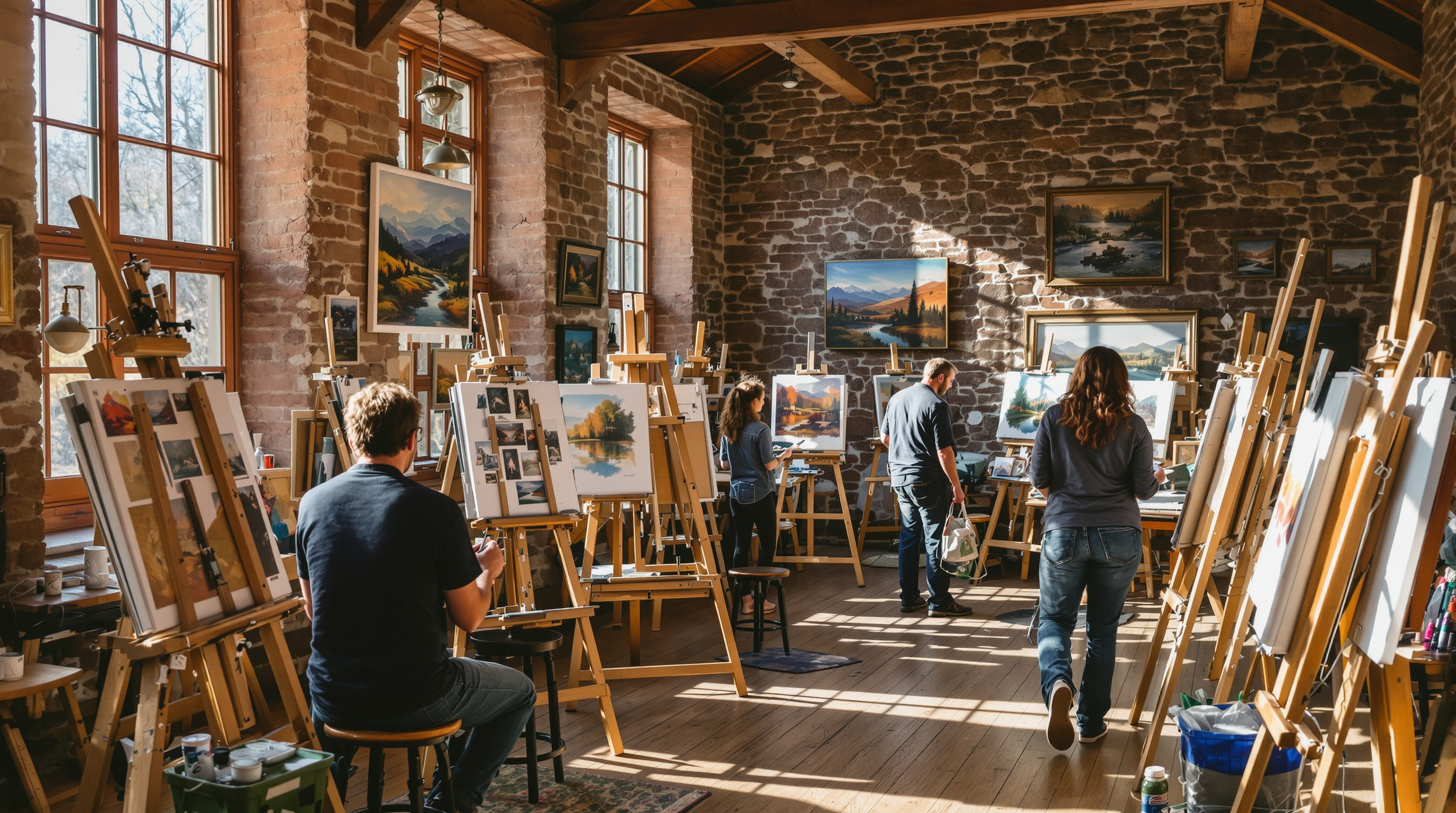
Visitors to the mountains often notice a scheduling convention that looks odd from outside: painting classes offered by the day rather than as a fixed multi-week course. It is not a compromise, it is an adaptation to who is actually in the room.
A conservatory can assume the same twelve students for twelve consecutive weeks. A mountain studio cannot. Its roll is a mix of year-round residents with irregular time, seasonal residents present half the year, and visitors with five days.
Teaching in day units imposes a real constraint: no session can depend on the previous one. The usual response is to build every class around a small set of principles that can be revisited from any starting point — most commonly some formulation of colour, composition and contrast, or of value, edge and shape. The specific triad varies by teacher. The structural point does not: the syllabus has to be circular rather than linear, so that a student who misses three weeks has not fallen behind.
When a class is compressed into a day, preparation protects working time. Separate supplied equipment from personal materials, essentials from optional tools, and provide a rigid carrier for wet or fragile work. For painting, a restrained palette and familiar brushes permit clearer comparisons than unfamiliar choices. For glass or print work, dimensions and material compatibility matter because a substitute can alter the working sequence, not merely the appearance.
A narrow question is equally useful. “How can three values describe a mountain study?” gives an instructor something observable, while “help me improve” does not. Notes work best when tied to a stage — first shape, first value statement, first edge correction — because the reason for a change is otherwise easy to lose. Labelling studies and packing surfaces separately can preserve more of the day's learning than one last hurried adjustment.
The regional studio-gallery is a hybrid the cities mostly do not have: a working studio with teaching space and a room of finished work, usually in a converted domestic or agricultural building. It typically shows the resident maker plus a handful of others from the same county. It is not a commercial gallery in the metropolitan sense — there is rarely a stable of represented artists, and the selection is as much social as curatorial.
These places matter disproportionately to the region's art economy, because they are where most visitors encounter contemporary regional work at all. A great deal of what is made in the High Country never reaches a city gallery.
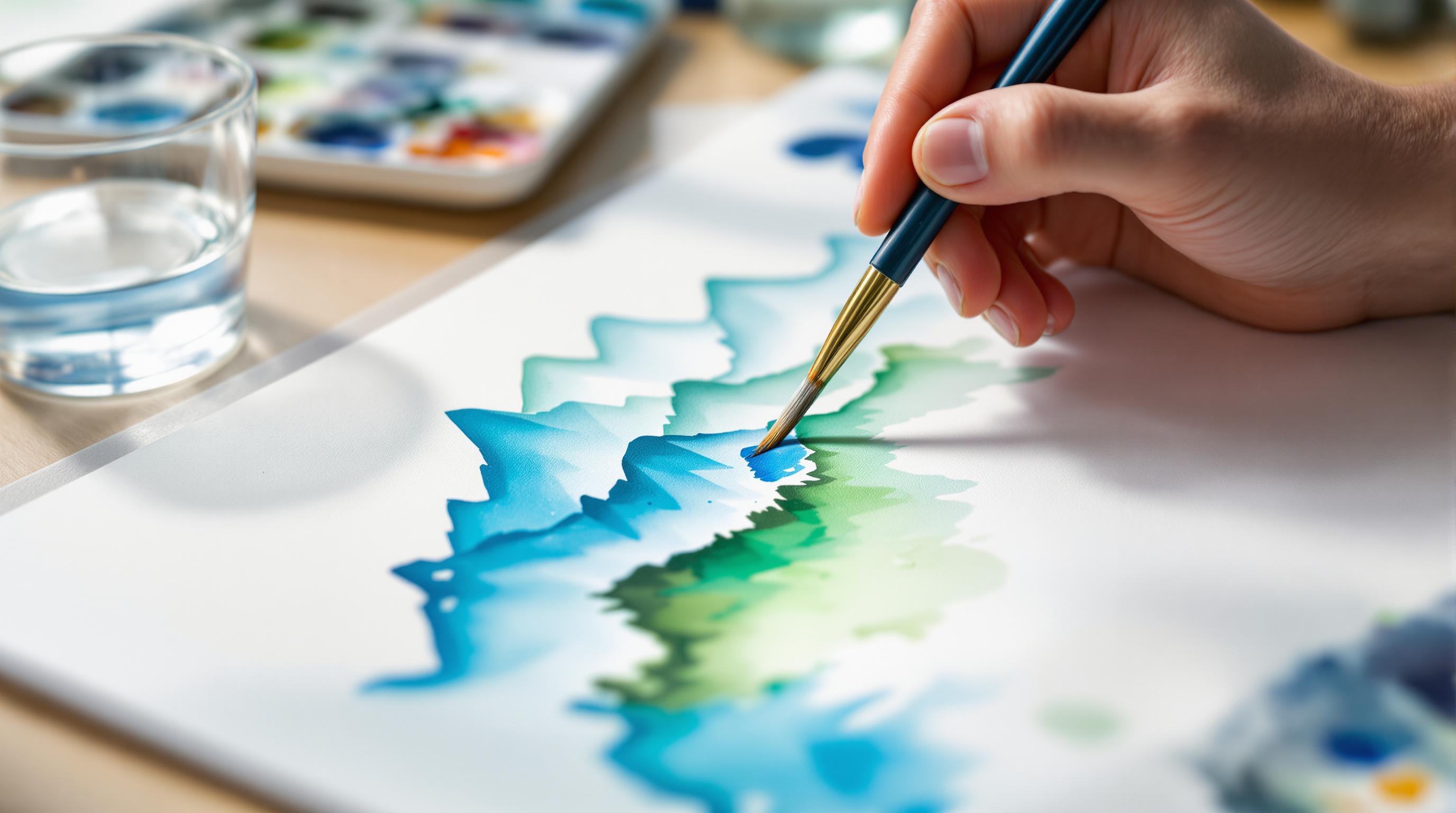
Oil, watercolour and acrylic are all widely taught, and the choice of medium in a beginner class is usually pedagogical rather than aesthetic. Watercolour is often taught first because it forces decisions — the medium is difficult to correct, so students learn to plan value structure before touching paper. Oil is taught for the opposite reason: its long open time allows a painting to be reworked, which suits sustained study of a single subject. Acrylic, a mid-twentieth-century material, sits between them and is often the practical choice for a one-day class simply because it dries fast enough to transport home.
Alongside painting, the region teaches an unusually deep bench of craft media. The National Endowment for the Arts and the North Carolina Arts Council both track this concentration; it is one of the densest craft-education corridors in the United States.
Workshops & learning Kiln-formed glass