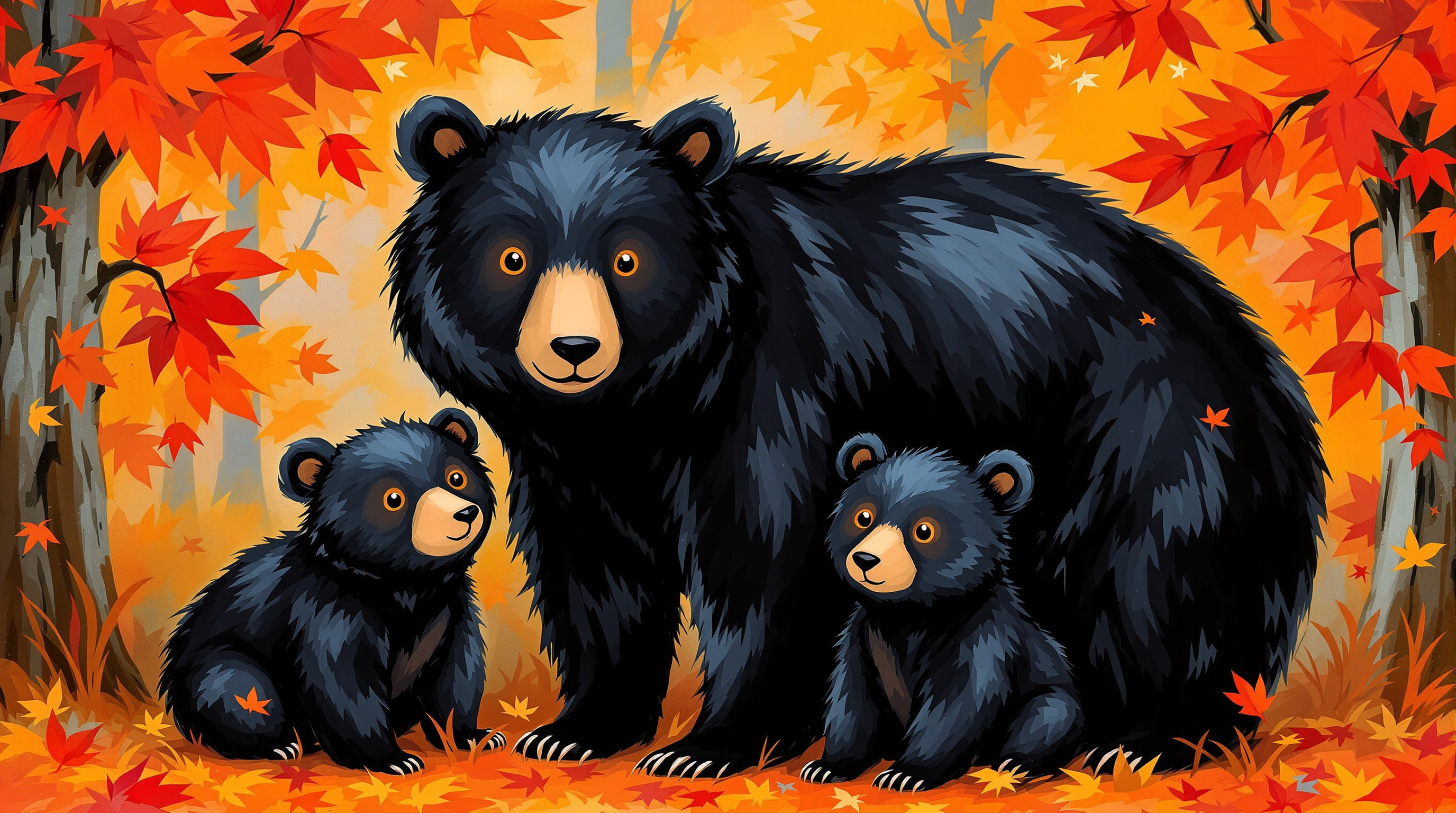
"Animal painting" and "wildlife painting" are routinely used as synonyms and are not the same thing. Wildlife painting places an animal in its habitat and is judged, at least partly, by documentary standards. Animal painting proper — the tradition that runs through domestic and working animals — is closer to portraiture, and is judged by whether it captures a specific individual. Sporting art is a third thing again, with its own conventions and its own history. Confusing them is the reason a lot of otherwise competent animal pictures feel unresolved.
Sporting art emerged as a distinct commercial genre in eighteenth-century Britain, driven by landowners who wanted their horses, hounds and estates recorded. George Stubbs (1724–1806) is the figure who raised it beyond record-keeping: he dissected horses over eighteen months to produce The Anatomy of the Horse, and the resulting understanding of underlying structure is why his animals stand convincingly where his contemporaries' float.
The American version developed differently. It arrived with the same subject matter — pointers, setters, retrievers, upland birds, horses — but was disseminated largely through popular printmaking rather than through commissioned oils, which broadened its audience and pushed it toward narrative. That print-driven history matters: it is why sporting subjects sit so comfortably in reproduction, and why the genre has a stronger commercial print tradition than most.
A sporting dog picture that reads as generic has usually failed at gesture, not at anatomy. Breed structure is the easy part; what identifies a working dog is what it is doing with its attention.
Pointers and setters present a specific compositional problem: the classic point is a held pose of extreme tension, and painting it convincingly requires the tension to be visible in weight distribution rather than merely asserted by the silhouette. Retrievers pose the opposite problem — most of their characteristic activity is in motion and in water, which brings the whole difficulty of painting disturbed reflective surfaces alongside the animal.
Portraiture of an individual animal is judged by the same standard as human portraiture: likeness. The technical requirements are unremarkable — accurate proportion, correct eye placement, coat rendered with varied edges. What separates a successful animal portrait from a competent one is nearly always the handling of the eye and the mouth, where an animal's characteristic expression actually lives, and the willingness to record asymmetry rather than idealising it away.
Painters generally work from a combination of extended observation and photographic reference, with the same caution that applies to wildlife work: photography flattens form and exaggerates contrast, so a portrait built only from a photograph tends to have a hard, cut-out quality.
A useful reference set answers three questions: structure, gesture and surface. One image seldom answers all three. A side view clarifies the relative lengths of back, neck and leg while hiding the width of the chest; a three-quarter view establishes volume but may compress the far limbs. Before drawing, compare fixed landmarks — eye line, shoulder, rib cage, hock — and resolve contradictions before adding coat or feather detail. Otherwise a polished surface conceals an unstable construction.
References for the animal and setting must also agree. Eye level determines how much of the back is visible, light direction fixes every cast shadow, and season governs coat, foliage and ground colour. Combining unrelated photographs without reconciling those conditions produces a scene whose parts are plausible but collectively false. A small field sketch records the whole arrangement at once, even when a camera supplies finer detail later.
Animal art has an unusually wide tonal range, and the comic end of it is neither modern nor lightweight. Animals in mildly absurd predicaments — a bear investigating something it should not, a dog caught in an act of obvious guilt — have been a staple of popular animal imagery for two centuries. The genre tolerates this because the animal is not embarrassed by it; the humour is entirely in the viewer's projection, which is also its subject.
It is worth noting how much technical skill the comic register actually demands. A humorous animal picture fails immediately if the animal is drawn badly, because the joke depends on the animal being convincingly itself while doing something ridiculous.
Animal subjects are painted across an unusually wide range of formats, and format is a real decision rather than a practical afterthought. Small square panels — six or eight inches — suit a single head study and force economy. Tall narrow formats suit a standing bird or a seated dog and produce a heraldic, formal effect. Large horizontal canvases suit a group in landscape, but require the habitat to be resolved to the same standard as the animal, which is where many ambitious animal pictures come apart.
For species identification and behaviour, the National Audubon Society and the North Carolina Wildlife Resources Commission are the practical starting points in this region. For the history of the genre and its place in American art, the Smithsonian American Art Museum holds relevant collections, and the National Wildlife Federation documents the long association between animal imagery and conservation advocacy.